


Favourite châteaux
The estates most often recommended to guests, from the neighbours in Saint-Estèphe to the great names of Pauillac, Saint-Julien and Margaux. They are grouped by appellation, then listed from nearest to furthest from the house.
1855 Grands Crus Classés and small family estates sit side by side here: in a single day you can go from a winery designed by an architect to a cellar where the winegrower runs the tasting himself. The map helps to group visits in the same area and keep driving to a minimum.
Most visits are by appointment: book directly with the château.
Saint-Estèphe
The house’s own appellation, the northernmost of the Médoc’s communal appellations. Gravel ridges over a subsoil richer in clay than elsewhere give linear wines built for ageing; most of the châteaux are less than ten minutes away.
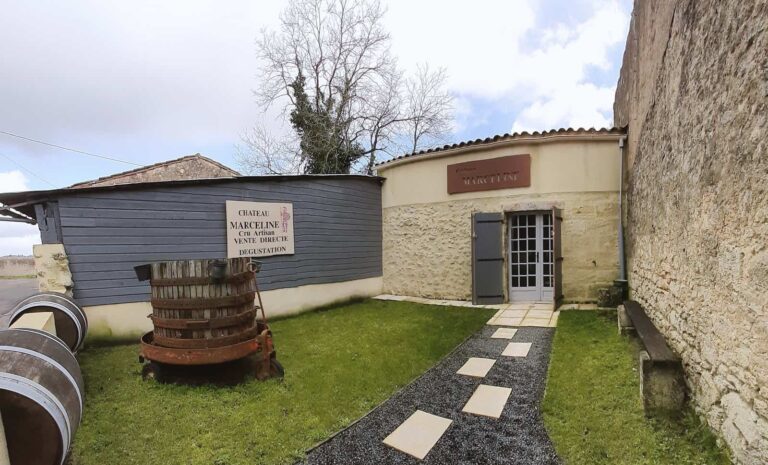
0.2 km · 1 min
Cru Artisan
Saint-Estèphe · Cru Artisan · On foot · 1 min by car · 0.2 km
Rue des 4 Vents
The estate
Château Marceline is a Cru Artisan of the Saint-Estèphe appellation, founded in 2009 on family vines. It all began in the 1960s, when Victor Dubuc, a garage owner by trade, planted a small plot; his son Henri later took the harvest to the village cooperative cellar.
In 2009 his daughter Annie entrusted the plots to Marc and Céline, who launched their own label: Marc, for many years a winemaker for other estates, made his first wine under his own name here. The château’s name combines their two first names, and Mars, the Roman god, is its emblem.
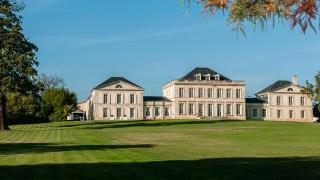
0.4 km · 2 min
Saint-Estèphe · On foot · 2 min by car · 0.4 km
Rue des écoles
The estate
Château Phélan Ségur takes its name from Bernard O’Phelan, an Irish merchant based in Bordeaux, who brought together the Clos de Garramey in 1805 and the Ségur de Cabanac estate in 1810. His son Frank, mayor of Saint-Estèphe for thirty years, inherited it in 1841; after the Gardinier family, the property now belongs to Philippe Van de Vyvere.
Its 70 hectares of clay-rich gravel, next to Montrose and Calon-Ségur, are planted mainly with cabernet sauvignon (58%) and merlot (39%). Visits are by appointment only, daily from March to October and on weekdays the rest of the year.
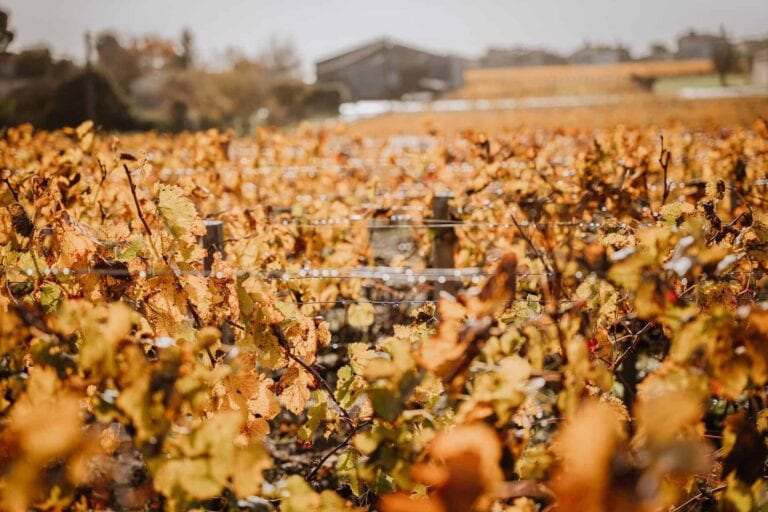
0.6 km · 2 min
Saint-Estèphe · On foot · 2 min by car · 0.6 km
3 impasse Robert
The estate
Château Domeyne is an estate in the Saint-Estèphe appellation whose recent history has passed through only a few hands. The Franchini family bought it in 1978 with 4 hectares and added part of Château Faget to it; Claire and Gonzague Lurton took it over in 2006, then Natacha and Vincent Ginestet in 2018, joined by their daughter Alexandra Varenne.
The vineyard covers nearly 9 hectares, split into more than 70 plots grouped in five blocks, on gravel and Tertiary clay over Saint-Estèphe limestone. It is planted with 60% merlot and 40% cabernet sauvignon; each plot is picked by hand and vinified separately, before ageing in barrels in the restored cellars.
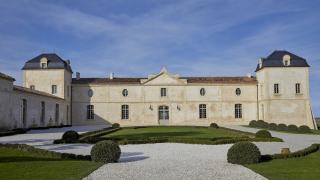
0.8 km · 3 min
Grand Cru Classé
Saint-Estèphe · Grand Cru Classé · On foot · 3 min by car · 0.8 km
Domaine de Calon
The estate
Château Calon-Ségur, in Saint-Estèphe, was classified as a third growth in 1855. A fief of the lords of Lesparre in the Middle Ages, Calon passed to the Ségur family by marriage in 1670, then to the Lestapis family in 1824 and the Gasquetons in 1894. Since 2012 it has belonged to Suravenir, a subsidiary of Crédit Mutuel Arkéa, which has renovated the vat room, the cellars and the chartreuse.
The vineyard covers 55 hectares, 50 of them planted, on three Quaternary gravel ridges sloping down towards the estuary. Cabernet sauvignon dominates and is set to reach 70% of the vines by 2032. The grand vin is aged for 18 to 20 months in new barrels.
1.2 km · 3 min
Saint-Estèphe · On foot · 3 min by car · 1.2 km
The estate
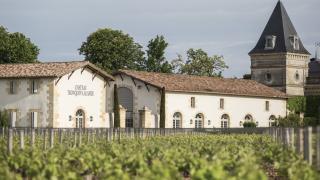
Château Tronquoy, presented on its website as Tronquoy-Lalande, is one of the oldest crus in Saint-Estèphe. The estate took shape in the 18th century around a pale-stone chartreuse flanked by two turrets, designed by Victor Louis for the Tronquoy family; Jean Texier and Arlette Castéja-Texier acquired it in 1968, then Martin and Olivier Bouygues in 2006.
The 30 hectares lie on some 8 metres of gravel and clay, with 52% merlot, 39% cabernet sauvignon, plus petit verdot and cabernet franc; the estate makes a red Saint-Estèphe and a white AOC Bordeaux.
2 km · 5 min
Saint-Estèphe · On foot · 5 min by car · 2 km
The estate
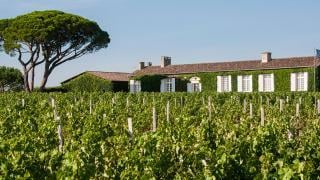
Château Meyney occupies one of the oldest wine-growing sites in Saint-Estèphe: Cistercian monks were already tending vines here in the 13th century. The estate, formally established in 1625 by the Feuillant monks, then passed to the Luetkens family and, in 1919, to the merchant Désiré Cordier, who reintroduced petit verdot; the Crédit Agricole group has owned it since 2004.
The vineyard forms a single 51-hectare block between Montrose and Calon-Ségur, on a gravel ridge overlooking the estuary, with a clay-limestone subsoil and a seam of blue clay. It combines cabernet sauvignon (50%), merlot (35%) and petit verdot (15%), and has been in conversion to organic farming since 2021. Two wines are made here: Château Meyney and Prieur de Meyney.
2.3 km · 4 min
Saint-Estèphe · 4 min by car · 2.3 km
The Marquis of Saint-Estèphe
The estate
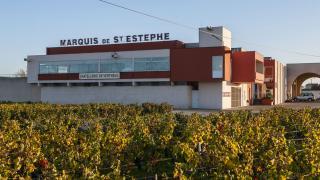
Le Marquis de Saint-Estèphe is the village cooperative cellar, founded in 1934 to bring together the commune’s winegrowers. Today it groups producers from Saint-Estèphe and Vertheuil, and makes a range of reds and rosés from sustainably farmed vines.
Le Marquis de Saint-Estèphe, AOC Saint-Estèphe, blends 60% merlot and 40% cabernet sauvignon, aged for a few months in vats to preserve the fruit. Château Léo de Prades adds a little cabernet franc and spends twelve months in French oak barrels; its vines have been certified HVE level 3 since 2019.
2.7 km · 4 min
3.3 km · 5 min
Saint-Estèphe · 5 min by car · 3.3 km
1 rue de Saint-Affrique, Leyssac,
The estate
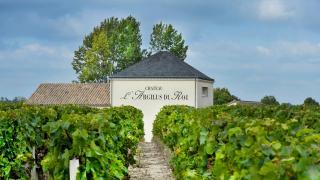
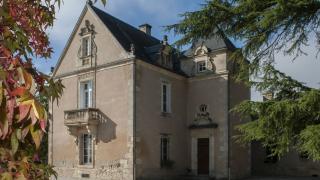
Château La Haye is one of the oldest houses in Saint-Estèphe: its wine-growing history goes back to 1557, when Janot Bernard de Leyssac acquired the property and planted the first vines. Legend has it that it was the hunting lodge where Henri II met Diane de Poitiers; the monogram interlacing an H and a D, carved in the stone of the entrance, is now the emblem on the labels.
The vines grow on clay-limestone and fine gravel, with a surface covered in quartz and pebbles. The grape mix is merlot and cabernet sauvignon in equal parts (45% each), completed by petit verdot, cabernet franc and a little malbec.
3.7 km · 6 min
3.9 km · 5 min
Grand Cru Classé
Saint-Estèphe · Grand Cru Classé · 5 min by car · 3.9 km
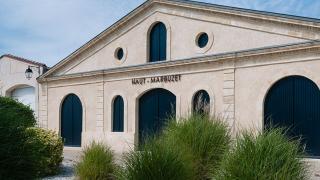
Château Cos Labory
The estate
Château Cos Labory is a fifth growth of Saint-Estèphe in the 1855 Classification. Its name combines the hill of Cos, where it stands, and François Labory, owner until 1845; Louis Gaspard d’Estournel bought it in 1847, and Michel Reybier and his family took it over in 2023 with the aim of preserving its independence.
The 35 hectares are split into several blocks on the deep gravel of the Cos plateau, over clay and limestone; three plots at the top, planted with the oldest vines, produce the grand vin. The grape mix is roughly half cabernet sauvignon, a third merlot, and a little cabernet franc and petit verdot. Visits are by appointment only.
3.9 km · 5 min
Grand Cru Classé
Saint-Estèphe · Grand Cru Classé · 5 min by car · 3.9 km
33180 Saint-Estèphe
The estate
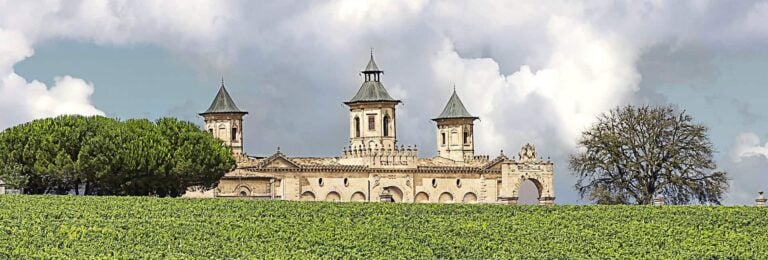
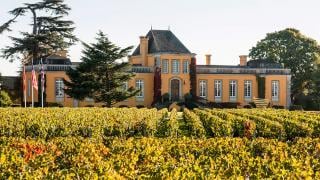
Château Cos d’Estournel, classified as a second growth in 1855 in the Saint-Estèphe appellation, dates from 1791 and takes its name from Louis Gaspard d’Estournel, who gave it its oriental-inspired architecture. Michel Reybier has run the property since 2000.
The vineyard covers about a hundred hectares split into many plots, two-thirds planted with cabernet sauvignon, completed by merlot and a little cabernet franc and petit verdot; the vines average 45 years old. The property makes Cos d’Estournel red and white, Pagodes de Cos and G d’Estournel, in a gravity-flow winery. Visits are private and charged, with a tasting of six wines, on request and subject to confirmation by the hospitality team.
5.1 km · 8 min
Grand Cru Classé
Saint-Estèphe · Grand Cru Classé · 8 min by car · 5.1 km
Blanquet West
The estate
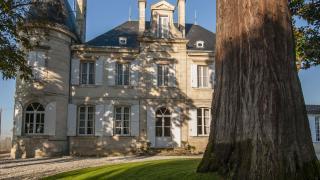
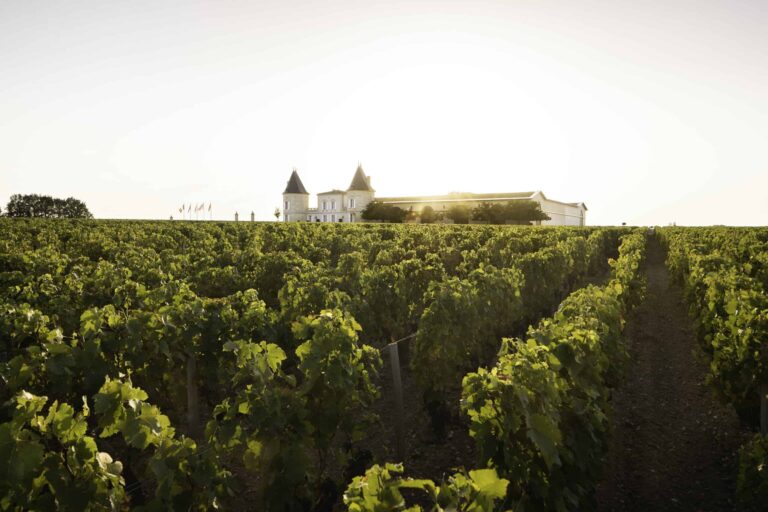
Château Lafon-Rochet, a fourth-growth Grand Cru Classé of 1855, dates back to 1557, when the estate was still called Rochet; it took the name Lafon around 1680, through the marriage of Antoinette de Guillemotes to Étienne de Lafon, a member of the parlement. Bought in ruins in 1960 by Guy Tesseron, who rebuilt the chartreuse, it has belonged to the Lorenzetti family since 2021, and its yellow façade gives the labels their colour.
The vineyard of some fifty hectares lies on deep gravel and gravelly clay. It is planted with 65% cabernet sauvignon and 30% merlot, with a little cabernet franc and petit verdot, and has been certified organic since 2024. Visits are by appointment all year round, in French or English.
5.3 km · 7 min
Saint-Estèphe · 7 min by car · 5.3 km
Blanquet
The estate
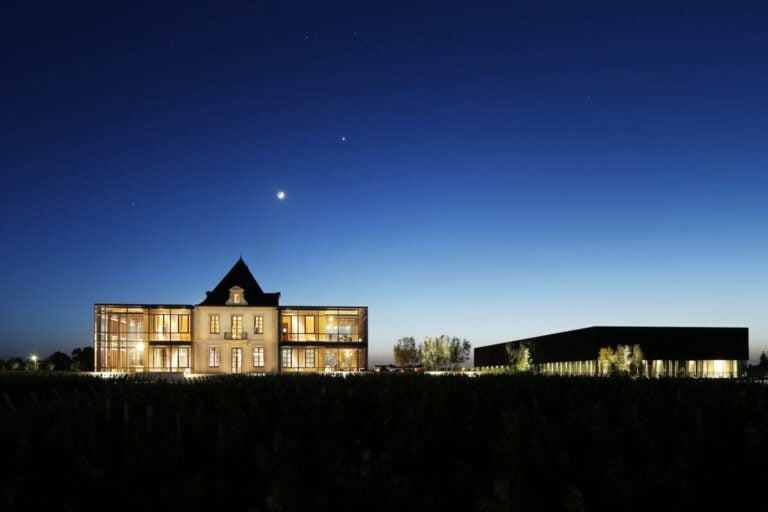
Château Lilian Ladouys dates back to the 16th century and was recognised as a Cru Bourgeois Supérieur in the 19th. Jacky and Françoise Lorenzetti acquired it in 2008, joined in 2018 by their daughter Manon; the winery was extended by Jean-Michel Wilmotte.
More than 40 hectares, certified organic since 2024, lie on gravel over clay and limestone. The grand vin blends cabernet sauvignon (47%), merlot (40%), petit verdot and cabernet franc; the second wine is called La Devise de Lilian. Visits are requested via an online form and then confirmed by the team.
Pauillac
Just to the south, Pauillac is home to three of the 1855 first growths, Lafite Rothschild, Latour and Mouton Rothschild, on deep gravel along the estuary. The small town, its harbour and its quays are also worth a stop.
7 km · 9 min
Grand Cru Classé
Pauillac · Grand Cru Classé · 9 min by car · 7 km
Route de Pédesclaux
The estate
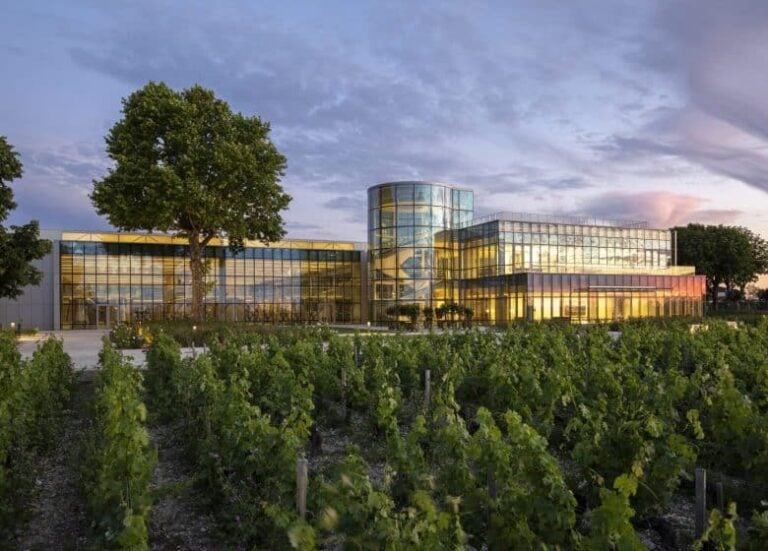
Château Pédesclaux is a Grand Cru Classé of 1855 in the Pauillac appellation, a wine estate since the 19th century. The Lorenzetti family took it over in 2009 and transformed it: the vineyard was restructured, new plots were bought and new buildings were designed by the architect Jean-Michel Wilmotte, including a fully gravity-flow winery completed in 2014.
The organically farmed vineyard covers nearly 50 hectares of deep gravel, sometimes mixed with clay and limestone. Cabernet sauvignon dominates (65%). The property makes Château Pédesclaux and a second wine, Fleur de Pédesclaux. Visits are requested online, in French, English or Spanish, and confirmed by the château.
9.3 km · 13 min
Grand Cru Classé
Pauillac · Grand Cru Classé · 13 min by car · 9.3 km
33250 Pauillac
The estate
Château Lynch-Bages takes its name from the hamlet of Bages, on the edge of Pauillac, and from the Lynch family, from Galway, who acquired it by marriage in 1750. In 1939 Jean-Charles Cazes took over the property; his descendants modernised it, up to the new cellars designed by the architect Chien Chung Pei, first used for the 2020 vintage.
This Grand Cru Classé covers about a hundred hectares of deep Garonne gravel, divided into some 200 sub-plots and certified HVE 3. The 19th-century gravity-flow vat room has been preserved. Visits by appointment from Monday to Saturday: 1 h 30 for €25 per person, tasting workshops from €75.
12 km · 14 min
Grand Cru Classé
Pauillac · Grand Cru Classé · 14 min by car · 12 km
D2, 33250 Pauillac
The estate
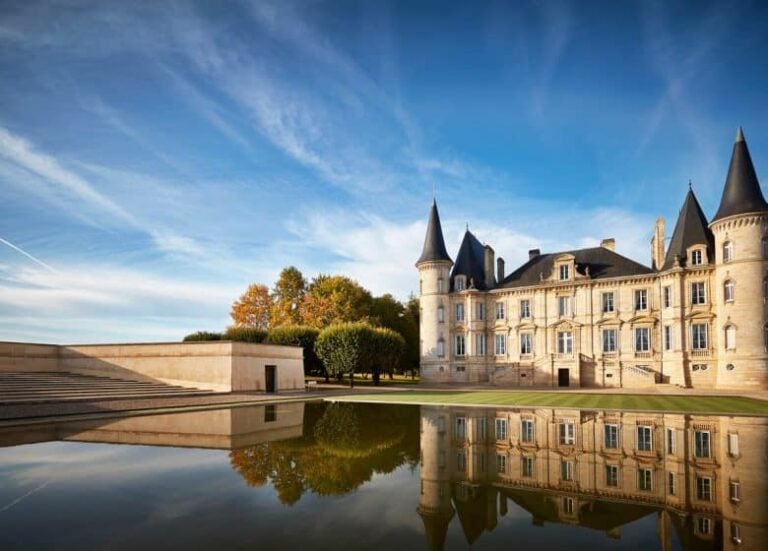
Château Pichon Baron, in Pauillac, has its origins in vineyards next to Latour, brought together in 1689 by Pierre Desmezures de Rauzan and given as a dowry in 1694 to Baron Jacques Pichon de Longueville. When the estate was divided in 1850, Baron Raoul’s share became Pichon Baron; he built the château with its two turrets there in 1851, and the wine was classified as a second growth in 1855. AXA Millésimes has owned it since 1987.
The 92 hectares lie on gravel with large pebbles, planted with 66% cabernet sauvignon and 27% merlot. Besides the grand vin, the property makes Les Griffons and Les Tourelles de Pichon Baron. Private visits take place all year round by reservation and end with a tasting of three wines.
Saint-Julien
Between Pauillac and Margaux, a compact appellation where classified growths make up most of the vineyard. The châteaux line the Route des Châteaux and the estuary, about twenty minutes from the house.
13.6 km · 16 min
Grand Cru Classé
Saint-Julien · Grand Cru Classé · 16 min by car · 13.6 km
38 Rue de Saint-Julien, 33250 Saint-Julien-Beychevelle
The estate
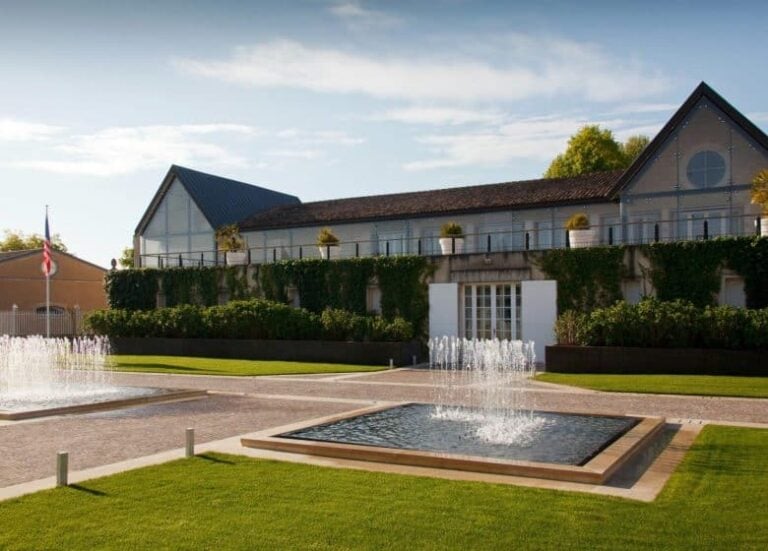
Château Léoville Poyferré, a second-growth Grand Cru Classé of 1855 in Saint-Julien, comes from the great Léoville estate, so named around 1740 and later divided into three. The Poyferré name became attached to it in 1840 through the marriage of an heiress to Baron Jean-Marie de Poyferré; the Cuvelier family has owned it since 1920.
The 80 hectares, split into several plots on gravel terraces, comprise 63% cabernet sauvignon, 25% merlot, 7% petit verdot and 5% cabernet franc. Twenty hectares in a single block produce Château Moulin Riche. Visits are by appointment, with online booking at least 48 hours in advance.
15.1 km · 20 min
Grand Cru Classé
Saint-Julien · Grand Cru Classé · 20 min by car · 15.1 km
1880 Langoa O, 33250 Saint-Julien-Beychevelle
The estate
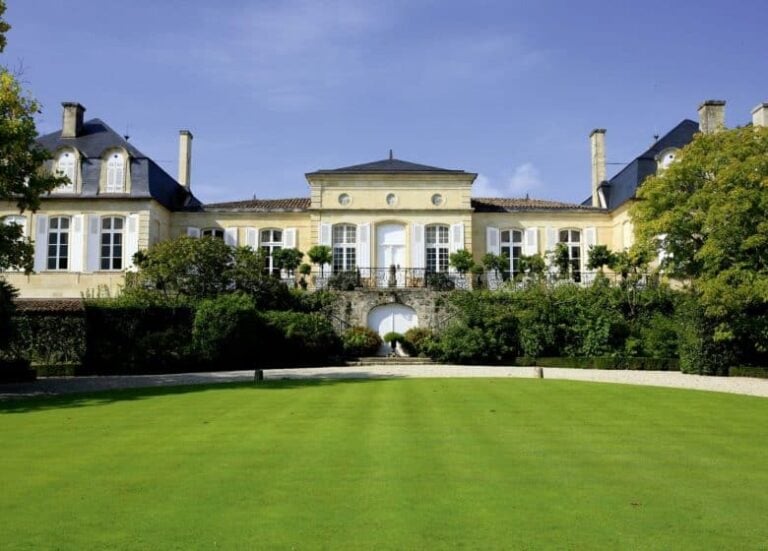
Château Léoville Barton, a second-growth Grand Cru Classé of Saint-Julien in 1855, is linked to a family of Irish origin settled in Bordeaux since 1725, when Thomas Barton founded a wine merchant’s house there. His grandson Hugh bought Langoa in 1821, then in 1826 part of the Léoville estate, which took the family name; Lilian Barton Sartorius and her children run it today.
The 50 hectares of vines occupy a gravel ridge over a clay subsoil, facing the estuary, with a large share of old vines. The grape mix is 77% cabernet sauvignon, 20% merlot and 3% cabernet franc. Visits with tasting must be booked in advance, online, by email or by phone.
22.1 km · 24 min
Grand Cru Classé
Saint-Julien · Grand Cru Classé · 24 min by car · 22.1 km
Château Beychevelle, 33250 Saint-Julien-Beychevelle
The estate
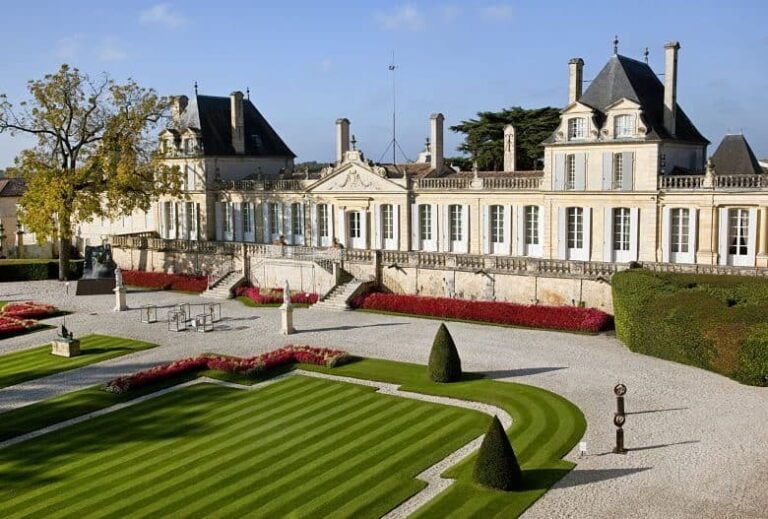
Château Beychevelle was built in 1565 for Bishop François de Foix-Candale, then passed to the Dukes of Épernon. Its name comes from the Gascon “Bécha Véla”, “lower the sail”: ships lowered their sails in front of the estate as a sign of submission to the duke. A Grand Cru Classé in 1855, it now belongs to the Castel group and Suntory.
Of its 250 hectares, 90 are planted on deep gravel, with 57% cabernet sauvignon, 40% merlot and 3% petit verdot. Visits are by appointment, in French or English, in groups of no more than fifteen people.
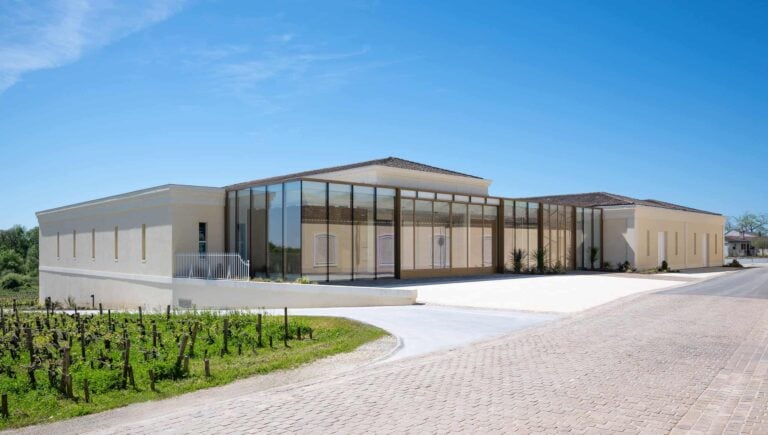
22.3 km · 25 min
Saint-Julien · 25 min by car · 22.3 km
1 chemin du Bourdieu
The estate
Château Branaire-Ducru dates from 1680, when Jean-Baptiste Braneyre acquired part of the Beychevelle estate in Saint-Julien. His descendants, the Du Luc family, built the neoclassical château in 1824; the property then passed to Gustave Ducru and stayed in the family until 1919. Classified as a fourth-growth Grand Cru Classé in 1855, it has belonged since 1988 to the Maroteaux family, today represented by François-Xavier Maroteaux.
The vineyard covers 60 hectares of Quaternary gravel, planted with 65% cabernet sauvignon, completed by merlot, petit verdot and cabernet franc. A gravity-flow vat room was opened in 2024. Visits are by appointment, Monday to Saturday from April to October and Monday to Friday in winter, with online booking.
Médoc
North of Saint-Estèphe, the Médoc proper: a more open landscape, meadows and marshes between the vineyards, and many family properties.
3.9 km · 6 min
Médoc · 6 min by car · 3.9 km
Route de Mapon, 33180 Saint-Seurin-de-Cadourne
The estate
Château Sociando-Mallet is in Saint-Seurin-de-Cadourne, north of Pauillac. Deeds from the 17th century already mention the Sossiondo family; the present name comes from the marriage, in 1831, of Marie-Elisabeth Alaret and Achille Mallet. In 1969 the merchant Jean Gautreau bought it, when it had only 5 hectares of vines.
Today the estate has 90, on Günz gravel over a clay-limestone subsoil: 48% cabernet sauvignon, 47% merlot, 5% cabernet franc. It makes Château Sociando-Mallet and a second wine, La Demoiselle de Sociando-Mallet, and describes itself as neither a classified growth nor a Cru Bourgeois.
Moulis
The smallest of the Médoc’s communal appellations, west of Margaux and away from the estuary. Chasse-Spleen and Poujeaux are its best-known names.
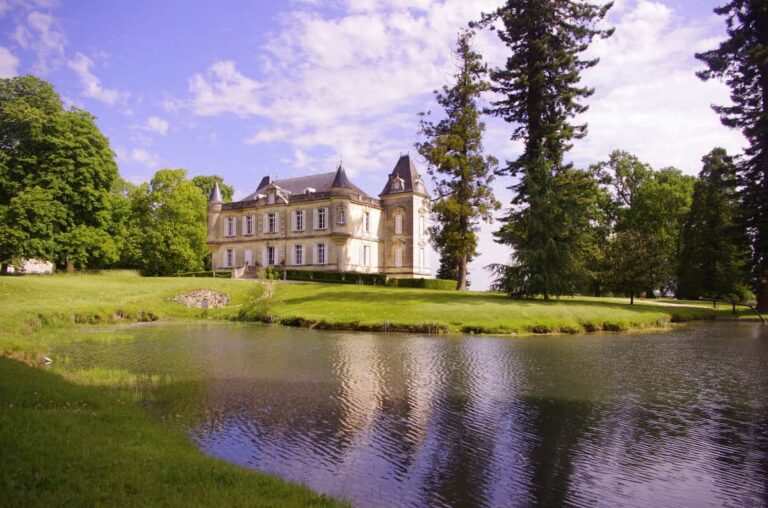
28.8 km · 30 min
Moulis · 30 min by car · 28.8 km
Château Mauvesin Barton, 33480
The estate
Château Mauvesin-Barton, in Moulis-en-Médoc, was first a stronghold, acquired in 1457 by Jean de Foix-Grailly. After the Revolution it returned to the Le Blanc de Mauvesin family, whose last marquis built the present Louis XIII-style château in 1853; the Baritault family then kept it for four generations, until its sale in 2011 to Lilian Barton Sartorius and her children, owners of Léoville and Langoa Barton in Saint-Julien.
Merlot (56%) occupies the clay-limestone soils and cabernet sauvignon (34%) the fine gravel, completed by 10% cabernet franc. Visits, in French or English, are by reservation from Monday to Friday.
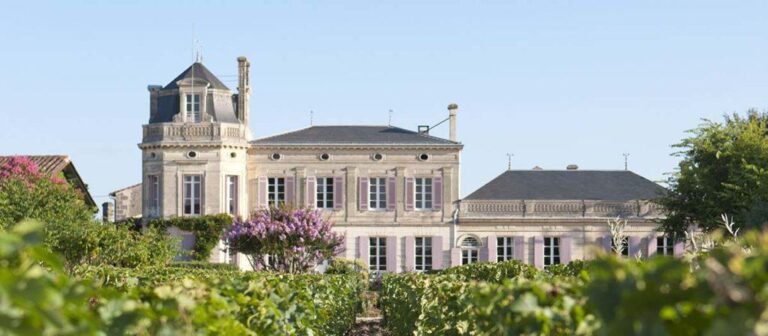
30.6 km · 32 min
Moulis · 32 min by car · 30.6 km
32 Chem. de la Razé, 33480 Moulis-en-Médoc
The estate
Château Chasse-Spleen, in Moulis-en-Médoc, dates back to 1720, when the Gressier family acquired a gravel ridge at the place called Grand Poujeaux. The name is said to date from the time of Rosa Ferrière, who ran the estate in the 1860s, and of the painter Odilon Redon, a neighbour. After the Segnitz and then the Lahary families, the property was bought in 1976 by Jacques Merlaut, and Céline Villars became its president in 2000.
With Brillette, added in 2023, the vineyard covers 130 hectares, 125 for red and 5 for white, 80% of it on gravel. Visits and tastings are by appointment, Monday to Friday and on some Saturdays from May into the summer; the estate also has an art centre and guest rooms.
Margaux
The southernmost and largest of the communal appellations, spread over five communes, about three-quarters of an hour from the house.
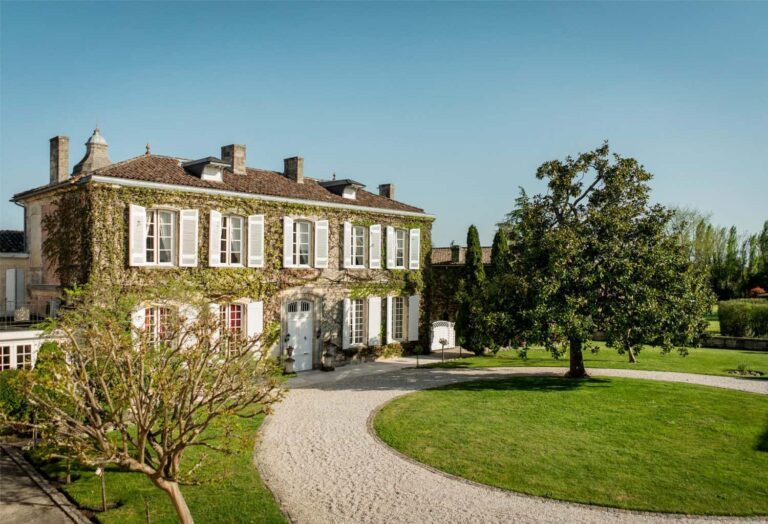
38.7 km · 42 min
Margaux · 42 min by car · 38.7 km
34 Av. de la 5ème République, 33460 Margaux-Cantenac
The estate
Château Prieuré-Lichine grew out of a priory founded in Cantenac in the Romanesque period by monks from the abbey of Vertheuil; the cru is first mentioned in 1444 and was classified as a fourth growth in 1855. Alexis Lichine bought it in 1951 and gave it his name two years later; the Ballande group has owned it since 1999.
Its plots, scattered across the five communes of the Margaux appellation, lie mainly on Garonne terrace gravel. Besides the grand vin, the estate makes Confidences de Prieuré-Lichine, Le Clocher du Prieuré in Haut-Médoc and a white AOC Bordeaux. The château welcomes visitors every day all year round, and visits are booked online.
Data on the Saint-Estèphe châteaux provided by the Maison du Vin de Saint-Estèphe.